Buy stopundshop.eu ?
We are moving the project
stopundshop.eu .
Are you interested in purchasing the domain
stopundshop.eu ?
domain@kv-gmbh.de · 0541-91531010
Buy stopundshop.eu ?
What is the name of our galaxy?
The name of our galaxy is the Milky Way. It is a barred spiral galaxy that contains our solar system and billions of other stars. The Milky Way is estimated to be about 100,000 light-years in diameter and is part of a group of galaxies known as the Local Group. **
How can we see our own galaxy?
We can see our own galaxy, the Milky Way, by looking up at the night sky. On a clear, dark night, away from city lights, we can see a band of faint light stretching across the sky, which is the Milky Way. This band is made up of the combined light of billions of stars, gas, and dust that make up our galaxy. Using binoculars or a telescope can also help to see more detail and individual stars within the Milky Way. **


Similar search terms for Phaidon-Press-Our-Galaxy
Top-Angebote
Products related to Phaidon-Press-Our-Galaxy:
-
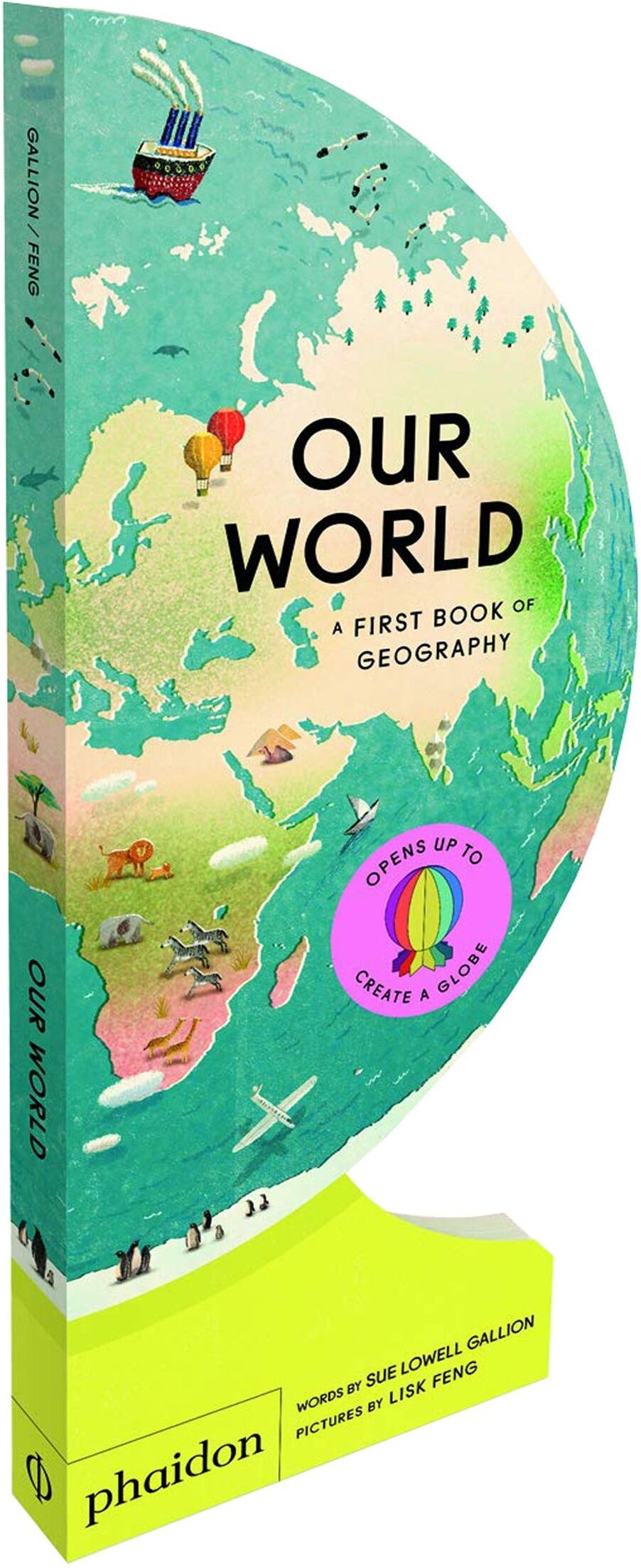
Phaidon Press Our World: A First Book of Geography by Sue Lowell GallionA read-aloud introduction to geography for young children that, when opened and folded back, creates a freestanding globe. Children are invited to identify and experience the Earth's amazing geography through rhyming verse and lush illustrations: from rivers, lakes, and oceans deep, to valleys, hills, and mountains steep. Secondary text offers more detailed, curriculum-focused facts and encourages readers to consider their own living environments, making the reading experience personal yet set within a global backdrop. This informative homage to Earth is sure to inspire readers to learn more about their planet – and to engage with the world around them. For Children Aged 2–5.9,99 £*Shipping: 2,99 £Secure redirect to the provider
-
Phaidon Press Our Underwater World: A First Dive into Oceans, Lakes, and Rivers (Our World Collection) by Sue Lowell GallionA stunning addition to the bestselling Our World Collection, this colorful, creative picture book transforms into a freestanding globe. Explore Earth’s underwater ecosystems with this charming read-aloud introduction to our blue planet. Beautifully illustrated and cleverly designed, Our Underwater World opens and folds back into a sturdy circular globe fastened by a hidden magnetic closure. Rhyming verse and lush illustrations teach young children to identify and experience Earth’s bodies of water – from freshwater ponds to coral reefs to the deepest depths of the ocean. Secondary text offers more detailed, curriculum-focused facts and encourages children to learn about the diverse plants and animals who populate aquatic habitats. Inspiring, informative, and one-of-a-kind, this artful homage to our vital water system is both an invitation to explore the natural world and an object to be treasured for years to come.9,99 £*Shipping: 2,99 £Secure redirect to the provider
-
Phaidon Press KAWS (Phaidon Contemporary Artists Series)The definitive study of the work of KAWS, one of the most influential and much-loved forces in contemporary art and culture KAWS is one of the most popular and recognizable contemporary artists, whose reach extends far beyond the art world into the realms of fashion, music, and popular culture at large. Beginning his career as a graffiti artist in the 1990s, KAWS has expanded his repertoire into painting, sculpture, drawing, product design, and augmented reality, together forming an artistic vision that unites all of these practices. KAWS has collaborated with some of the most prominent international brands, including Uniqlo, Comme des Garçons, Supreme, Nike, Dior, sacai, General Mills, and many more, and the book includes images of the artist’s studio by Jason Schmidt and a selection of KAWS’s previously unpublished preparatory drawings as well as work spanning his entire career, from his early graffiti days to his highly collectible vinyl toys, complex abstract paintings, and monumental public sculptures. Richly illustrated and featuring the most significant scholarship on his work to date, this book is a definitive study on the life and career of this extraordinary artist.23,99 £*Shipping: 2,99 £Secure redirect to the provider
-
Phaidon Press Graphic Classics by Phaidon EditorsAs seen in Fast Company, Dwell, and Wallpaper* Discover 500 of the world’s greatest graphic designs in one big, bold, and brilliant volume This deep dive into graphic design history presents the work of more than 400 designers across 33 countries and 5 continents, with work dating back to the 14th century. Reimagined from the Phaidon best-seller Graphic: 500 Designs that Matter, the book’s dizzying array of designs range from the Gutenberg Bible to Joy Division album art, with work by both anonymous creators and industry icons such as Aleksandr Rodchenko, Paul Rand, Paula Scher, Ahn Sang-soo, and Julia Born. The generous format and two-part design structure allows designs to be shown in detail, with large images up front and a 300+ word text for each entry in the back – making this equal parts picture and reading book. A design category key adds functionality while indicating the sheer variety of disciplines at work within one medium, from advertising and information design to posters, books, magazines, and logos. This book is the perfect reference guide for design and art lovers, enthusiasts, and professionals at any stage of their careers, as well as all those interested in and impacted by visual communication. Carefully revised to bring every detail up to date, organized chronologically, and with the addition of 50 new examples that highlight designers reshaping the graphic culture of today, this collection is more comprehensive, compelling – and relevant – than ever before. Featured designers include: Reza Abedini, Otl Aicher, Herbert Bayer, Max Bill, Laurenz Brunner, A. M. Cassandre, Joseph Churchward, Alan Fletcher, Federica Fragapane, Graphic Thought Facility, Béla Horovitz, Eric Hu, Shira Inbar, Tibor Kalman, Amos Paul Kennedy, Jr., Frith Kerr and Amelia Noble, Anita Klinz, El Lissitzky, George Lois, Karel Martens, Bruno Munari, Nontsikelelo Mutiti, Hassan Rahim, Aleksandr Rodchenko, Stefan Sagmeister, Koichi Sato, Paula Scher, Elena Serrano, Ladislav Sutnar, Ikko Tanaka, Jan Tschichold, Carol Twombly, Jop van Bennekom, Andy Warhol, and Tao Yuan-qing.42,99 £*Shipping: 0,00 £Secure redirect to the provider


-
Is there life anywhere in our galaxy?
As of now, there is no definitive evidence of life elsewhere in our galaxy. However, the vastness of the Milky Way, with its billions of stars and potentially habitable planets, makes it statistically likely that life could exist elsewhere. Scientists continue to search for signs of extraterrestrial life through methods such as studying exoplanets, looking for biosignatures, and listening for potential signals from intelligent civilizations. While we have not yet found concrete evidence of life in our galaxy, the search continues. **
-
Does the press enhance or spoil our language?
The press can both enhance and spoil our language. On one hand, the press can introduce new words and phrases, promote clear and effective communication, and contribute to the evolution of language. On the other hand, sensationalism, clickbait, and the use of jargon or biased language can detract from the quality of language used in the press. Ultimately, the impact of the press on language depends on the specific content and style of the publication. **
-
Would we all die if the Andromeda Galaxy collided with our galaxy?
If the Andromeda Galaxy were to collide with our galaxy, the Milky Way, it is unlikely that all life on Earth would be wiped out. The galaxies are mostly made up of empty space, so the chances of stars or planets colliding with each other are very low. However, the collision would likely cause some disruption to the orbits of stars and planets, potentially leading to changes in our solar system. Overall, while the collision would have significant effects on our galaxy, it is unlikely to result in the extinction of all life on Earth. **
-
Would we all die if the Andromeda Galaxy collides with our galaxy?
No, we would not all die if the Andromeda Galaxy collides with our galaxy, the Milky Way. The collision between the two galaxies is expected to happen in about 4 billion years, and it is likely that the stars and planets in both galaxies will not collide with each other due to the vast distances between them. However, the gravitational forces from the collision could potentially disrupt the orbits of stars and planets, but it is unlikely to result in the destruction of all life in the galaxies. **

Could our solar system exist without a galaxy?
No, our solar system could not exist without a galaxy. Our solar system is part of the Milky Way galaxy, and the gravitational forces and interactions within the galaxy are essential for the formation and stability of our solar system. Additionally, the material from which our solar system formed likely originated from the Milky Way galaxy. Without the presence of a galaxy, the conditions necessary for the formation and evolution of our solar system would not exist. **
Why is the center of our galaxy so bright?
The center of our galaxy, the Milky Way, is so bright because it contains a high concentration of stars, dust, and gas. This region, known as the galactic bulge, is densely packed with stars that emit a significant amount of light and energy. Additionally, there is a supermassive black hole at the center of the Milky Way, known as Sagittarius A*, which also contributes to the brightness of this region through its interactions with surrounding material. The combination of these factors results in the center of our galaxy being one of the brightest regions in the night sky. **
Top-Angebote
Products related to Phaidon-Press-Our-Galaxy:
-
Phaidon Press Our Galaxy: A First Adventure in Space (Our World Collection) by Sue Lowell GallionA stunning addition to the bestselling Our World Collection, this colorful, creative picture book transforms into a freestanding globe. Explore our galactic home with this charming read-aloud introduction to astronomy. Beautifully illustrated and cleverly designed, Our Galaxy opens and folds back into a sturdy circular globe fastened by a hidden magnetic closure. Rhyming verse and lush illustrations teach young children about astronomical objects – from the planets in our solar neighborhood to faraway stars in the Milky Way. Secondary text offers more detailed, curriculum-focused facts and encourages children to learn about rockets, rovers, and other space technologies. Inspiring, informative, and one-of-a-kind, this artful homage to outer space is both an invitation to explore the night sky and an object to be treasured for years to come.9,99 £*Shipping: 2,99 £Secure redirect to the provider
-
Phaidon Press Our Seasons: The World in Winter, Spring, Summer, and Autumn (Our World Collection)Explore Earth’s four seasons with this charming read-aloud introduction to weather around the world. Beautifully illustrated and cleverly designed, Our Seasons opens and folds back into a sturdy circular globe fastened by a hidden magnetic closure. Rhyming verse and lush illustrations teach young children to identify and experience nature’s circle of seasons – from vibrant autumn and frosty winter to blossoming spring and bountiful summer. Secondary text offers more detailed, curriculum-focused facts and encourages children to consider their own environments, presenting a personal perspective set against a global backdrop. Inspiring, informative, and one-of-a-kind, this artful homage to Earth is both an invitation to explore the natural world and an object to be treasured for years to come.9,99 £*Shipping: 2,99 £Secure redirect to the provider
-
Phaidon Press Our World: A First Book of Geography by Sue Lowell GallionA read-aloud introduction to geography for young children that, when opened and folded back, creates a freestanding globe. Children are invited to identify and experience the Earth's amazing geography through rhyming verse and lush illustrations: from rivers, lakes, and oceans deep, to valleys, hills, and mountains steep. Secondary text offers more detailed, curriculum-focused facts and encourages readers to consider their own living environments, making the reading experience personal yet set within a global backdrop. This informative homage to Earth is sure to inspire readers to learn more about their planet – and to engage with the world around them. For Children Aged 2–5.9,99 £*Shipping: 2,99 £Secure redirect to the provider
-
Phaidon Press Our Underwater World: A First Dive into Oceans, Lakes, and Rivers (Our World Collection) by Sue Lowell GallionA stunning addition to the bestselling Our World Collection, this colorful, creative picture book transforms into a freestanding globe. Explore Earth’s underwater ecosystems with this charming read-aloud introduction to our blue planet. Beautifully illustrated and cleverly designed, Our Underwater World opens and folds back into a sturdy circular globe fastened by a hidden magnetic closure. Rhyming verse and lush illustrations teach young children to identify and experience Earth’s bodies of water – from freshwater ponds to coral reefs to the deepest depths of the ocean. Secondary text offers more detailed, curriculum-focused facts and encourages children to learn about the diverse plants and animals who populate aquatic habitats. Inspiring, informative, and one-of-a-kind, this artful homage to our vital water system is both an invitation to explore the natural world and an object to be treasured for years to come.9,99 £*Shipping: 2,99 £Secure redirect to the provider
-
What is the name of our galaxy?
The name of our galaxy is the Milky Way. It is a barred spiral galaxy that contains our solar system and billions of other stars. The Milky Way is estimated to be about 100,000 light-years in diameter and is part of a group of galaxies known as the Local Group. **
-
How can we see our own galaxy?
We can see our own galaxy, the Milky Way, by looking up at the night sky. On a clear, dark night, away from city lights, we can see a band of faint light stretching across the sky, which is the Milky Way. This band is made up of the combined light of billions of stars, gas, and dust that make up our galaxy. Using binoculars or a telescope can also help to see more detail and individual stars within the Milky Way. **
-
Is there life anywhere in our galaxy?
As of now, there is no definitive evidence of life elsewhere in our galaxy. However, the vastness of the Milky Way, with its billions of stars and potentially habitable planets, makes it statistically likely that life could exist elsewhere. Scientists continue to search for signs of extraterrestrial life through methods such as studying exoplanets, looking for biosignatures, and listening for potential signals from intelligent civilizations. While we have not yet found concrete evidence of life in our galaxy, the search continues. **
-
Does the press enhance or spoil our language?
The press can both enhance and spoil our language. On one hand, the press can introduce new words and phrases, promote clear and effective communication, and contribute to the evolution of language. On the other hand, sensationalism, clickbait, and the use of jargon or biased language can detract from the quality of language used in the press. Ultimately, the impact of the press on language depends on the specific content and style of the publication. **
Similar search terms for Phaidon-Press-Our-Galaxy
-
Phaidon Press KAWS (Phaidon Contemporary Artists Series)The definitive study of the work of KAWS, one of the most influential and much-loved forces in contemporary art and culture KAWS is one of the most popular and recognizable contemporary artists, whose reach extends far beyond the art world into the realms of fashion, music, and popular culture at large. Beginning his career as a graffiti artist in the 1990s, KAWS has expanded his repertoire into painting, sculpture, drawing, product design, and augmented reality, together forming an artistic vision that unites all of these practices. KAWS has collaborated with some of the most prominent international brands, including Uniqlo, Comme des Garçons, Supreme, Nike, Dior, sacai, General Mills, and many more, and the book includes images of the artist’s studio by Jason Schmidt and a selection of KAWS’s previously unpublished preparatory drawings as well as work spanning his entire career, from his early graffiti days to his highly collectible vinyl toys, complex abstract paintings, and monumental public sculptures. Richly illustrated and featuring the most significant scholarship on his work to date, this book is a definitive study on the life and career of this extraordinary artist.23,99 £*Shipping: 2,99 £Secure redirect to the provider
-
Phaidon Press Graphic Classics by Phaidon EditorsAs seen in Fast Company, Dwell, and Wallpaper* Discover 500 of the world’s greatest graphic designs in one big, bold, and brilliant volume This deep dive into graphic design history presents the work of more than 400 designers across 33 countries and 5 continents, with work dating back to the 14th century. Reimagined from the Phaidon best-seller Graphic: 500 Designs that Matter, the book’s dizzying array of designs range from the Gutenberg Bible to Joy Division album art, with work by both anonymous creators and industry icons such as Aleksandr Rodchenko, Paul Rand, Paula Scher, Ahn Sang-soo, and Julia Born. The generous format and two-part design structure allows designs to be shown in detail, with large images up front and a 300+ word text for each entry in the back – making this equal parts picture and reading book. A design category key adds functionality while indicating the sheer variety of disciplines at work within one medium, from advertising and information design to posters, books, magazines, and logos. This book is the perfect reference guide for design and art lovers, enthusiasts, and professionals at any stage of their careers, as well as all those interested in and impacted by visual communication. Carefully revised to bring every detail up to date, organized chronologically, and with the addition of 50 new examples that highlight designers reshaping the graphic culture of today, this collection is more comprehensive, compelling – and relevant – than ever before. Featured designers include: Reza Abedini, Otl Aicher, Herbert Bayer, Max Bill, Laurenz Brunner, A. M. Cassandre, Joseph Churchward, Alan Fletcher, Federica Fragapane, Graphic Thought Facility, Béla Horovitz, Eric Hu, Shira Inbar, Tibor Kalman, Amos Paul Kennedy, Jr., Frith Kerr and Amelia Noble, Anita Klinz, El Lissitzky, George Lois, Karel Martens, Bruno Munari, Nontsikelelo Mutiti, Hassan Rahim, Aleksandr Rodchenko, Stefan Sagmeister, Koichi Sato, Paula Scher, Elena Serrano, Ladislav Sutnar, Ikko Tanaka, Jan Tschichold, Carol Twombly, Jop van Bennekom, Andy Warhol, and Tao Yuan-qing.42,99 £*Shipping: 0,00 £Secure redirect to the provider
-
Phaidon Press Cecily Brown (Phaidon Contemporary Artists Series)The first ― and highly anticipated ― monograph on one of the most influential painters of our time Cecily Brown is a British-born, New York-based artist who rose to prominence in the late 1990s. Brown established her unique voice within the art sphere by investigating the sensual qualities of oil paint and challenging the conventions of abstraction and figuration. Through a range of reference to old master paintings, Abstract Expressionism, and popular culture, Brown's symbolic language, exuberant brushwork, rich palette, intense energy, and embrace of the erotic have redefined some of painting's historical canons.24,95 £*Shipping: 2,99 £Secure redirect to the provider
-
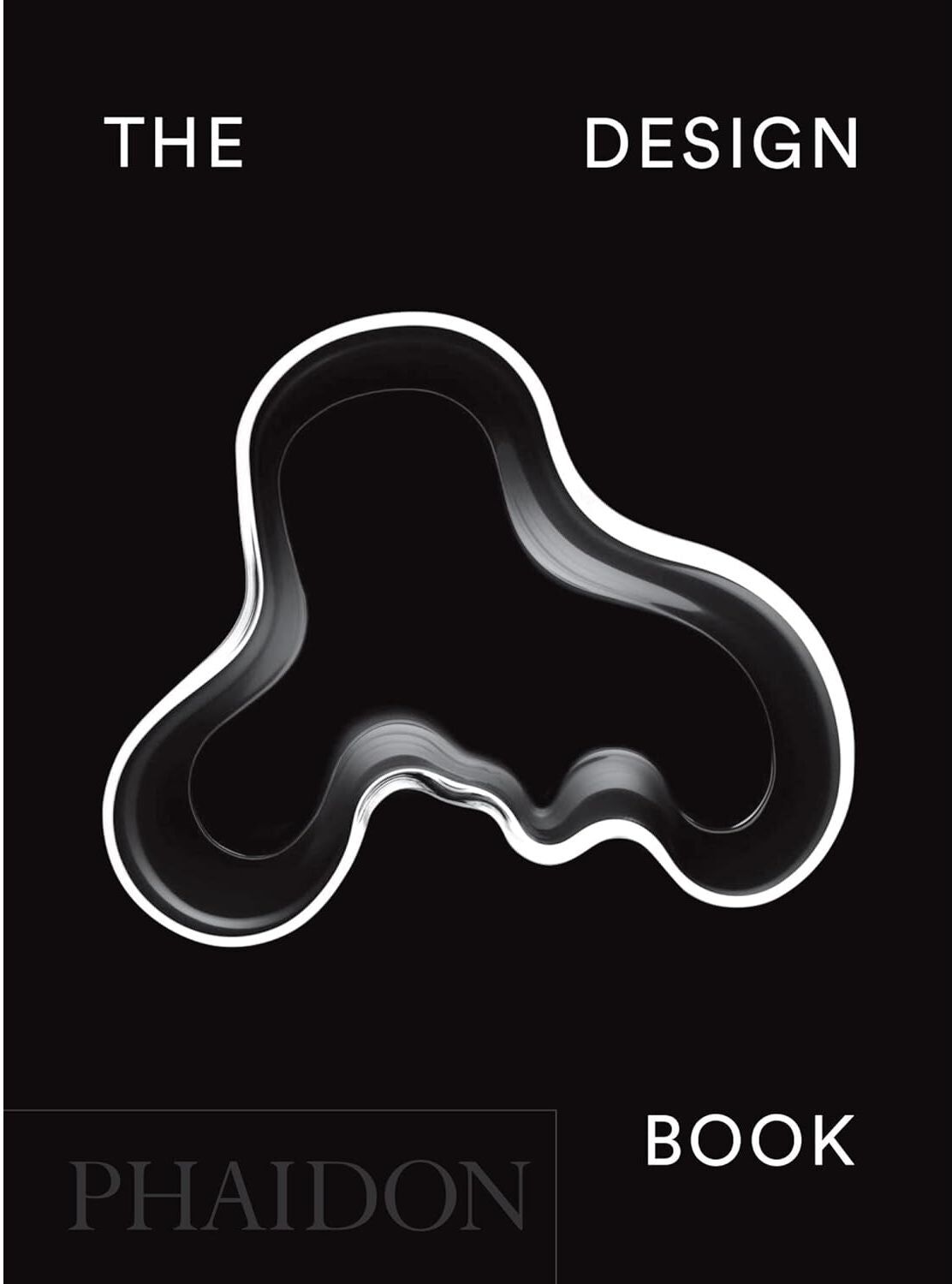
Phaidon Press The Design Book by Phaidon EditorsDiscover more than 500 of the most innovative, influential, and enduring products from the last five centuries in this fully revised and expanded edition of Phaidon's much-loved companion to the best of design Take an extraordinary journey through objects from the last 500 years that have improved our environments and functionality, and shaped society and culture. With an image for each object featured and descriptive text including information about the product itself, its designer, manufacturer, and history,The Design Book includes iconic pieces by such masters as Le Corbusier, Philippe Starck, and the Eames, alongside classic objects such as the paper clip, the hurricane lantern, and the martini glass. This new edition also features 30 new products from the last 15 years, expertly selected and curated to reflect modern-day design breakthroughs.12,99 £*Shipping: 2,99 £Secure redirect to the provider
-
Would we all die if the Andromeda Galaxy collided with our galaxy?
If the Andromeda Galaxy were to collide with our galaxy, the Milky Way, it is unlikely that all life on Earth would be wiped out. The galaxies are mostly made up of empty space, so the chances of stars or planets colliding with each other are very low. However, the collision would likely cause some disruption to the orbits of stars and planets, potentially leading to changes in our solar system. Overall, while the collision would have significant effects on our galaxy, it is unlikely to result in the extinction of all life on Earth. **
-
Would we all die if the Andromeda Galaxy collides with our galaxy?
No, we would not all die if the Andromeda Galaxy collides with our galaxy, the Milky Way. The collision between the two galaxies is expected to happen in about 4 billion years, and it is likely that the stars and planets in both galaxies will not collide with each other due to the vast distances between them. However, the gravitational forces from the collision could potentially disrupt the orbits of stars and planets, but it is unlikely to result in the destruction of all life in the galaxies. **
-
Could our solar system exist without a galaxy?
No, our solar system could not exist without a galaxy. Our solar system is part of the Milky Way galaxy, and the gravitational forces and interactions within the galaxy are essential for the formation and stability of our solar system. Additionally, the material from which our solar system formed likely originated from the Milky Way galaxy. Without the presence of a galaxy, the conditions necessary for the formation and evolution of our solar system would not exist. **
-
Why is the center of our galaxy so bright?
The center of our galaxy, the Milky Way, is so bright because it contains a high concentration of stars, dust, and gas. This region, known as the galactic bulge, is densely packed with stars that emit a significant amount of light and energy. Additionally, there is a supermassive black hole at the center of the Milky Way, known as Sagittarius A*, which also contributes to the brightness of this region through its interactions with surrounding material. The combination of these factors results in the center of our galaxy being one of the brightest regions in the night sky. **
* All prices are inclusive of VAT and, if applicable, plus shipping costs. The offer information is based on the details provided by the respective shop and is updated through automated processes. Real-time updates do not occur, so deviations can occur in individual cases. ** Note: Parts of this content were created by AI.